
The detrimental debt cycle

On Tuesday April 7, AP literature teacher Matt Flickinger opened his computer to find an email from Austin Independent School District (AISD) with a daunting subject line: budget update. Scanning through the email, the future of his school district got cloudier and cloudier with each paragraph his eyes grazed.
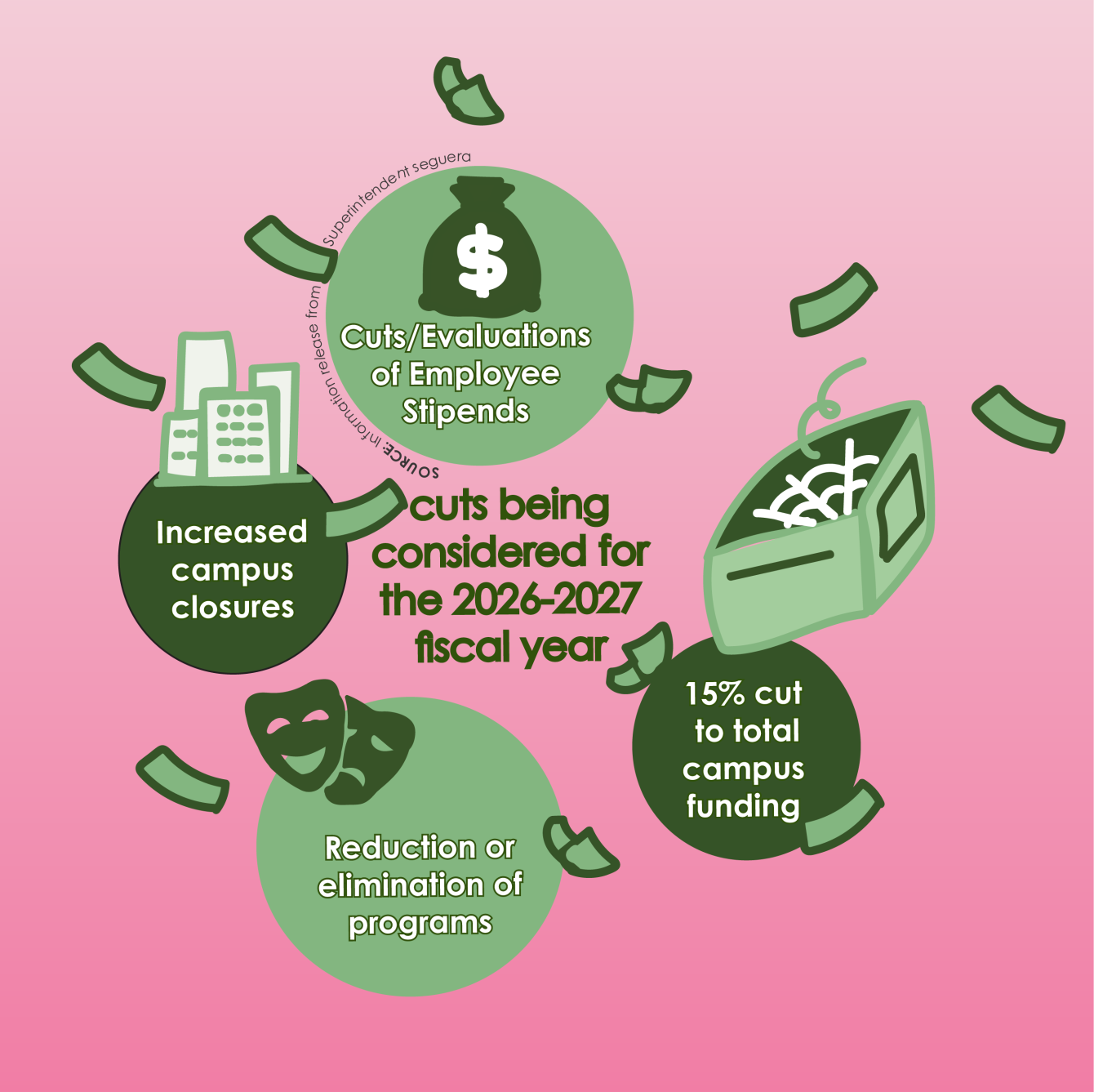
The email brought notice of the largest budget deficit ever experienced in AISD’s history, with a warning that cuts will be taken significantly in staffing levels, employee stipends, ratios of campus administration, as well as the reduction or elimination of programs.
“The budget deficit for the district really worries me for future students,” senior Gracie Grahmann said. “The majority of students have an extracurricular they really care about and every program needs funds to keep it running. Students may have financial difficulties and can’t help pay for certain facilities, events, or materials.”
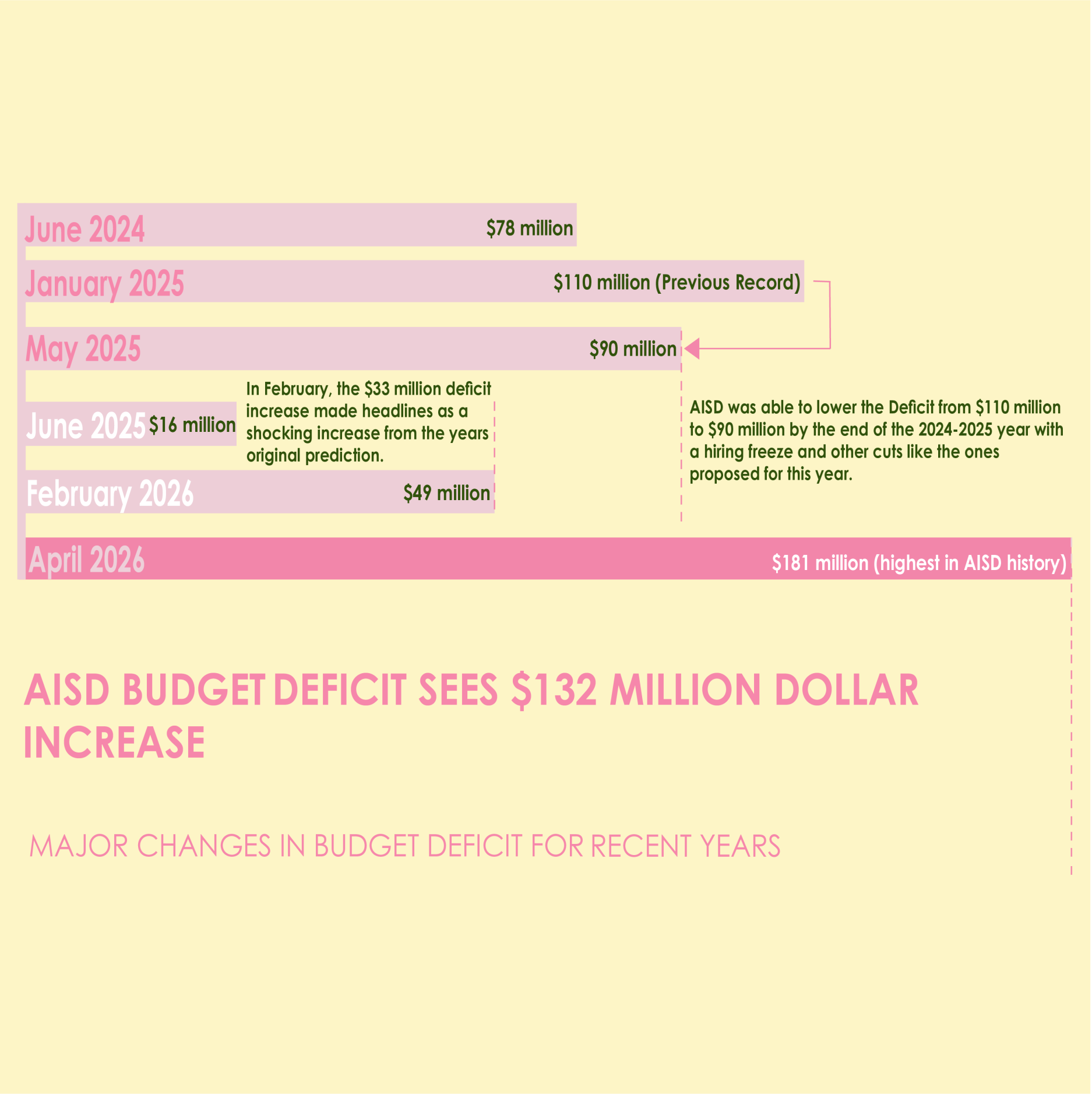
Austin Independent School District (AISD) is now projecting a $181 million budget deficit by the end of 2026, more than 11 times the previously predicted $16 million deficit, according to an official information release from superintendent Matias Seguera on April 7.
“In my time as a student in Austin Independent School District I’ve seen budget cuts in extracurricular programs, inability to supply needs to classrooms, poor keeping of school utilities like water fountains, and disappointment from teachers and students that the district is restricting our education with their poor budgeting skills,” sophomore Peter Davis said.
The extreme increase in budget deficit comes as a result of unanticipated low property taxes, a large drop in enrollment, and an overall lack of sufficient funding for essential spending, according to AISD.
“If money were out of the picture I would envision a future where diversity and exploring different activities was encouraged and accessible to every student,” Grahmann said. “I believe school should be the place where you find yourself and that’s difficult if every student has to worry about finances.”
Total funding for public school districts in Texas is based on student enrollment, and both allocation and recapture are based on property tax values. Recapture allows for an amount of Texas public school funding, to be ‘recaptured’ by the state and redistributed. The state also allocates money towards the Economic Stabilization Fund, or the ‘rainy day’ fund of nearly $30 billion.
“I am disappointed with my district,” Flickinger said. “However, they’re also in a very tough position because state leadership is sitting on a mountain of money, and I think there’s political motivation to kill public education with no plan of what to replace it with.”
Because recapture is determined based on average property tax rates in a district, large disparities within that average may be overlooked. According to an official 2024 AISD diversity report, approximately 56% of all students in the entire district are economically disadvantaged, however, there are large disparities between individual schools within the district. While about only 7% of students at LASA high school are reported to experience economic disadvantage, a total of 97% of students attending Kealing are dealing with financial disadvantage.
“I know other schools may not be as economically advantaged as Bowie is, and knowing that we can see the effect of the debt here, I cannot imagine how bad it is in the lesser funded schools,” Davis said. “I feel horrible for the students at those schools because I know there is very little they can do when facing the district.”
Budget allocation and deficit proposals are made in June before each school year. According to official AISD reports, the 2024-2025 school year deficit reached a previous record predicted high of $110 million before being lowered to $90 million before the end of the school year. In order to compensate for the high predicted deficit last year, the district made traditional business-minded efforts like hiring freezes and laying off administrative staff.
“A business-minded projection is what got us into this in the first place,” Flickinger said. “When speaking to people who don’t have experience in education, what they often miss is that this personable relationship between teacher and student is what’s necessary in order to inspire growth.”
In the statement released on April 7, Superintendent Seguera warned of similar efforts in the coming year, these included the already proposed closure of 10 campuses, a 15% reduction of campus budgets, as well as major cuts to teacher positions, pay, and planning time, reduction to administrative and supportive staff, and cuts to programs within schools.
“A more business-minded approach to education might look like giant classrooms taught by AI, in order to, you know, bridge that, that budgetary gap we wouldn’t have to pay anybody,” Flickinger said. “Stuffing a bunch of kids in somewhere that wouldn’t work. It just straight up wouldn’t work. We already don’t have the support we need for students who require more support than I can give in a classroom. If you take me out of it completely, or shove in 10 times the kid in a space, it might be economically feasible, but the goals of that, of education, go beyond economy.” b

In the 2026-2027 school year, AISD will face many changes at the campus and classroom levels as a result of the high deficit. Superintendent Seguera warned one area the district will need to consider is cuts in master schedules, planning periods, and overall staffing levels, leading to increased class size.
“It manifests itself in different ways for different years,” Flickinger said. “At one point we had a superintendent who was like, ‘save power, turn off the lights.’ I think the most damaging manifestation that I’ve seen is the recent refusal by the district to replace teachers who leave and increase class sizes.”
There are a number of different variations of this change, including that only non-core teachers would transition to teaching seven out of eight periods. Additionally, the continued hiring freeze means the total number of teaching staff will not increase to keep up with the changes.
“If you think about, like, an AP class, kids will have received feedback on essays of a personal nature, like two or three times a year, as opposed to, you know, two or three times per nine weeks” Flickinger said. “I also think it impacts lesson planning. The kind of stuff that we can do with 190 kids is very different from what we would do if we only had 140, which would be more ideal. And then the personal connections that I have with students have been impacted.”
Scheduling more students to a class period is a consolidation strategy that has been implemented by the district in past years. Transitioning from six out of eight to seven out of eight would mean the total number of students served by each teacher will increase. Either of these changes would create a larger student-to-teacher ratio.
“I feel the student-to-teacher ratio is important,” Grahmann said. “One teacher for 30 students could lead to many problems including struggling kids going unnoticed, lack of care for the students, lack of connection between student and teacher, and division in the classroom. A class of 17 students leaves room for connection between student and teacher, making it easier for teachers to tend to students’ needs.”
Students in classes of smaller sizes are found to be more equipped for school readiness, according to research done in 2024 by the National Library of Medicine. Additionally, the report claimed that teachers would be more equipped to create dynamic and interesting learning environments.
“Having more intimate classrooms is better for students because, personally, if I have more time to connect with my teacher then I get to actually understand the material,” sophomore Mary Jenson said. “I feel like in a bigger class it’s harder for me to focus. I feel like I can continue to ask questions and get more help and more tutoring, I feel like that’ll be easier with less students in a class.”
These changes in the amount of students taught by each teacher will impact the amount of time teachers will be able to spend on lesson plans, grading, meetings, or serving students individually when extra help may be needed. Additionally, Seguera also warned that teacher stipends will need to be considered when cuts are made for the next school year.
“I think you’ll have more exhausted teachers,” Flickinger said. “I think bigger picture is what I see as really problematic with that is that we have a district that claims to do what is best for teachers, then doesn’t replace teachers who are gone, and doesn’t make sure that we have teacher retention by ensuring that we actually have planning time for the giant classes they’re forcing on us. So, if the district really did care about us, they would backtrack on that, which they have done a number of times.”
Another potential cut to staff at the campus level is the number of administrative and support staff employed under AISD. Administrative staff serve to support the academic success of students through acquiring resources and ensuring that the students and teachers are supported throughout the entire educational process.
“We have no control over the district’s budget choices, and they hold the rest of our life in their hands,” sophomore Davis said. “School is our gateway into college, then the rest of our professional life.”
With the largest deficit in AISD’s history, a 15% cut will be taken to campus budgets across the district, and additional elimination or reduction of extra-curricular programs will need to be considered going into the 2026-2027 school year, as Seguera wrote in the recent information release.
“Over my time as a student under AISD I’ve watched programs I really care about take major budget cuts including Oral Interpretation,” Grahmann said. “This impacted me and other students in the club majorly because this activity can be very expensive because we need to pay for every tournament or competition we go to. We had to spend lots of time at the beginning of the year to raise money, but we still ended up having to pay ourselves because it was hard raising money.”
Participation in extracurricular arts and sports activities are incredibly important to a student’s development of social and emotional skills, according to a 2024 report from the National Library of Medicine. AISD says cuts will be made to these programs, but the specific programs hit the hardest are yet to be determined, and may be different across campuses, according to the information release.
“Students shouldn’t have to worry about their program dying due to budget cuts they should be able to enjoy and explore as many opportunities as they want,” Grahmann said. “My activity I have done throughout all of middle and high school is theatre and I would be absolutely crushed if I couldn’t do that, but as school has gone on I feel like my family has had to pay more and more every year just for me to stay involved.”
With state funding continuing to drop as a result of lowered enrollment from current immigration policies, and a drop in property taxes, the district will need to make tens of millions of dollars of cuts if balancing the budget is the eventual goal.
“If money wasn’t a factor I would see a place where every single student could receive a very personalized education fit exactly to their interests,” Davis said. “All the classes would have top notch resources, and a smaller student to teacher ratio to increase the amount of individualized learning, as the teachers would have much more time on their hands. The campus would be well kept, and misbehavior would be quickly and efficiently handled to keep the atmosphere welcoming. Students from less fortunate backgrounds would not have their school experience affected, as the school would be able to step up and provide all necessary resources to all students, including free school supplies and lunch.”
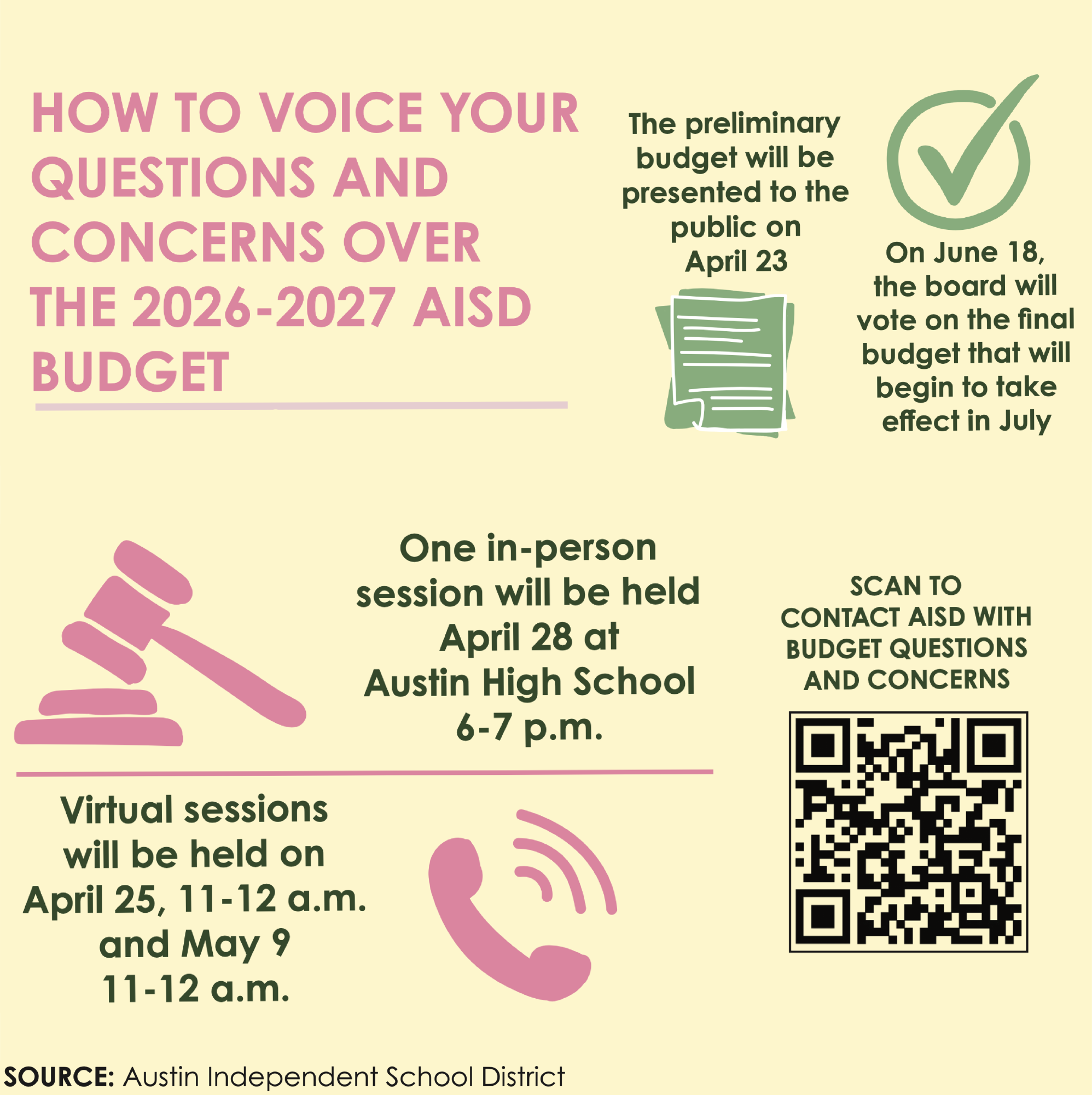
AISD does not have control over the sum of funding received by the district, only the way in which that money is used and the way the district compensates for financial shortfalls. Cuts will be made in the coming years, but a lot of places they will be made are still uncertain. The district calls families and staff under the district to share their voice on virtual or in-person sessions on April 25, 28 and May 9.
“I fear for how bad it will get,” Davis said. “We are losing so many important resources like Blend and if the district continues their ineffective budgeting approach they will need to start chopping away at our hopes and dreams at school by defunding our interests just so the school can stay open. This greatly limits the sights of students, as in the future they may never get to experience the opportunities previous students received.”
Your donation will support the student journalists of James Bowie High School. Your contribution will help cover our annual website hosting costs. Any contributions made through this service are NOT tax deductible. If you would like to make a tax deductible donation OR to subscribe to our print edition, please contact us at [email protected].