Modern Masculinity

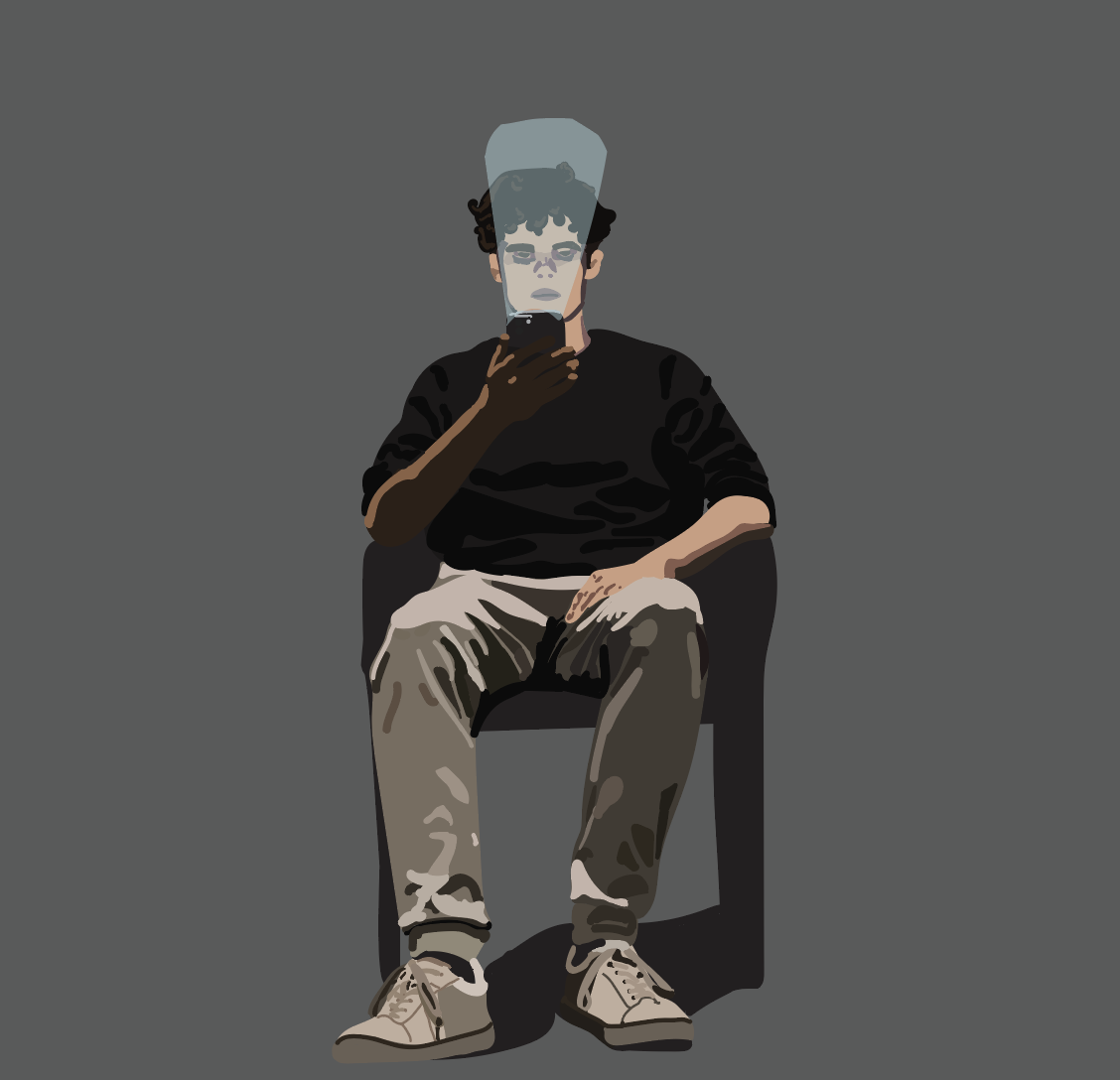
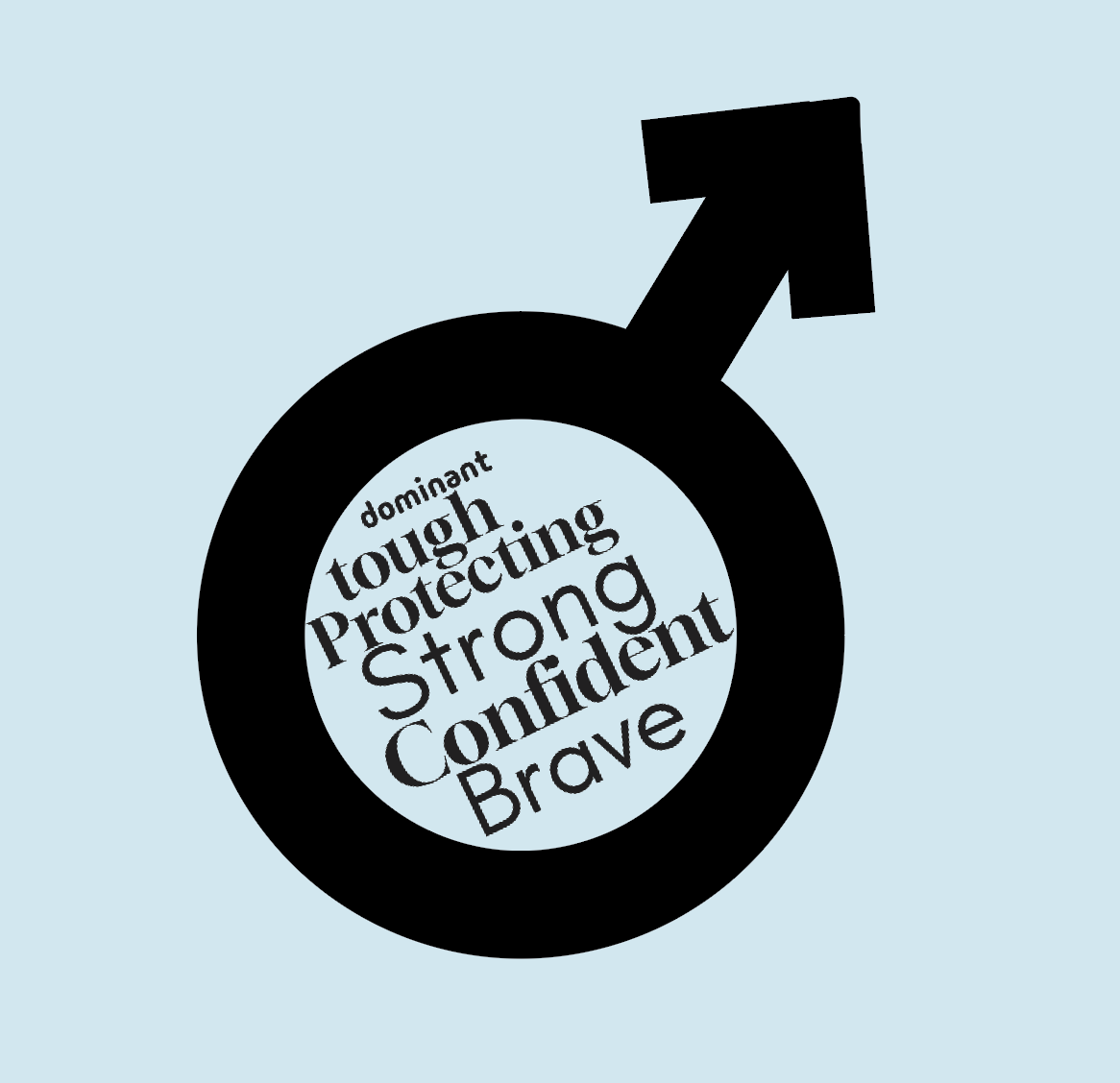
Scrolling past AI-generated brain rot and skit videos, senior Dylan Shahid-Russell lands on a video titled “maximize your masculinity,” where a muscular man urges him from the other side of the screen to disregard his emotions and perform his duties as a man.
Social media has created an outlet to share cultures, beliefs, and lifestyles with anyone who is willing to watch a video anywhere from 30 seconds to two minutes long. Memes and trends circulate, and among them are videos from influencers who provide a variety of interpretations of how to be masculine.
“In this day and age, it’s really easy to just turn on your phone and then there’s someone there yelling at you about what the ideal man is, “ Shahid-Russell said.
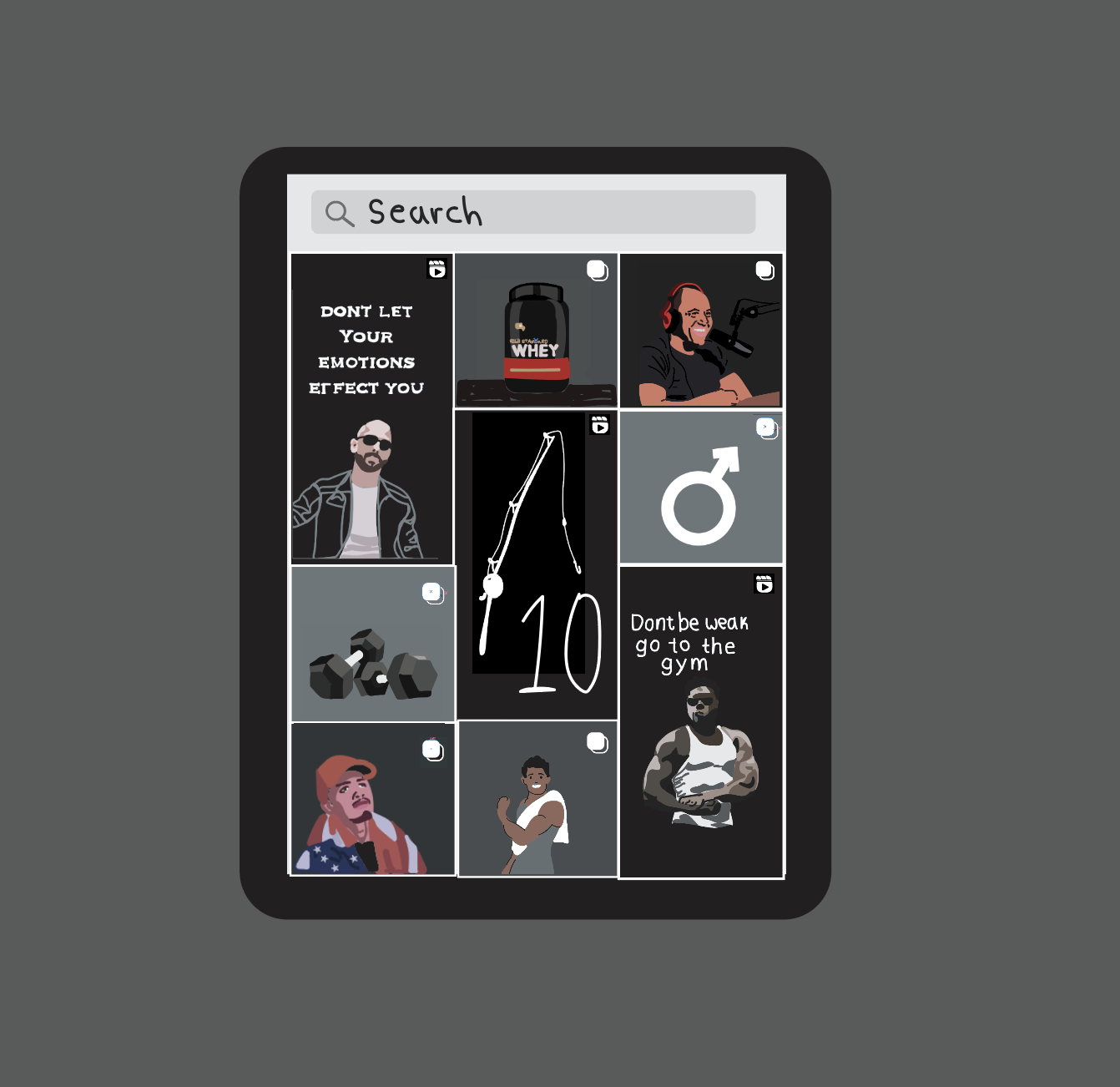
On social media, how-to’s are a common content type. ‘How-to get rich’ or ‘how-to maximize gym gains,’ are just a few found floating among the algorithms. However, just a few clicks away, a ‘how-to’ on masculinity may be lurking, especially if you’re a young male teen.
“I have seen a lot of these masculinity influencers on Instagram and the way that they’re doing this is they’re targeting young men,” senior Aiden Schexnaydre said.
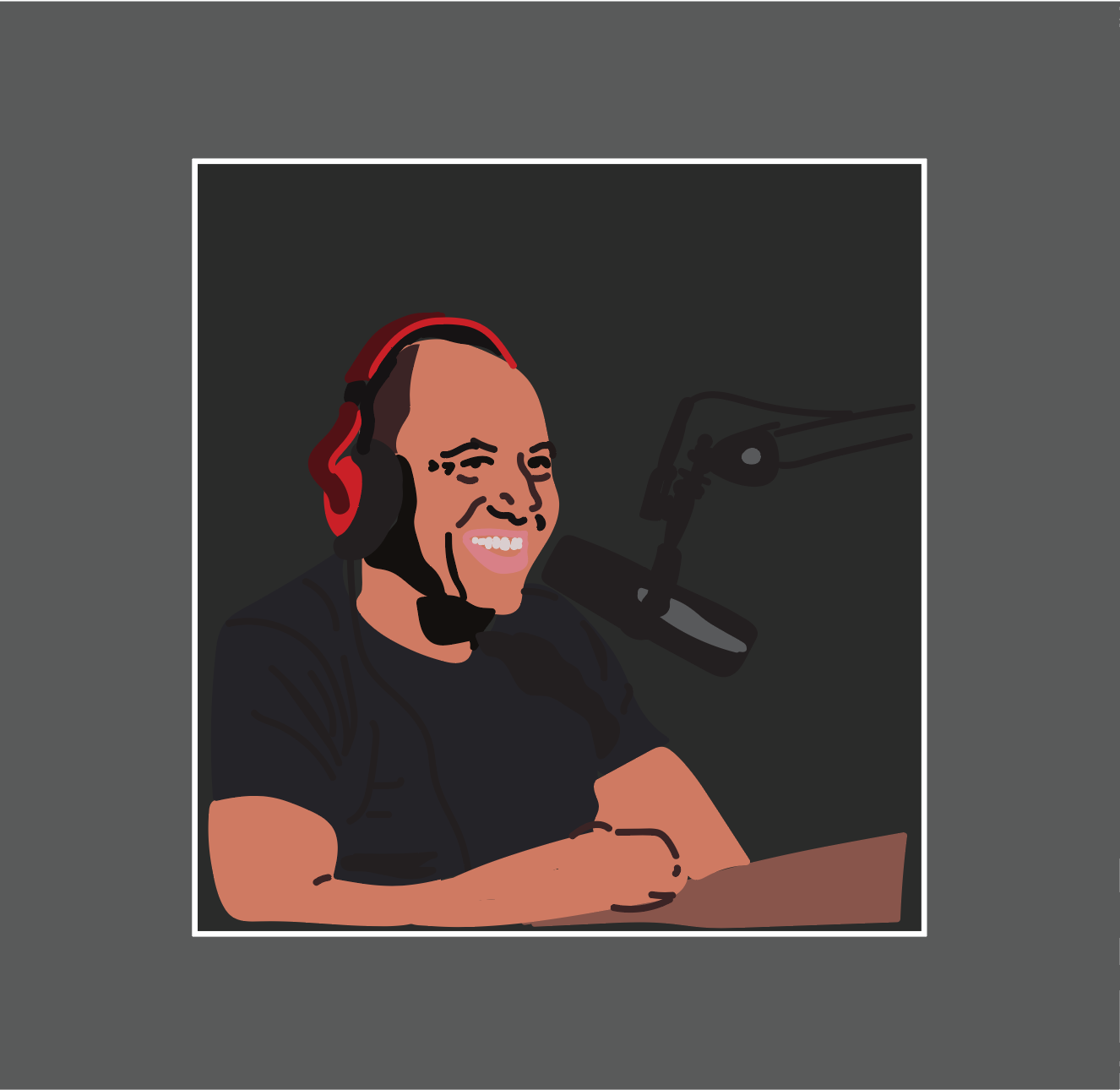
Social media platforms use algorithms, or rules computers follow, to track data and push out content that aligns with viewer’s previous choices. These algorithms connect certain demographics with other content that are trending among that demographic. Many influencers of this content type belong to what is referred to as the “manosphere,” like Andrew Tate, Jordan Peterson, and Joe Rogan.
“Influencers like Joe Rogan and Andrew Tate promote hyper-masculinity on their platforms,” Schexnaydre said. “They encourage men to ignore their emotions in order to become more masculine and pursue dominate relationships with women.”
At the height of his influencer career in 2022, Andrew Tate had nearly five million followers on Instagram, and videos captioned #Andrew Tate reached upwards of 12 billion views. Tate remarked, in an interview with popular streamer Adin Ross, that being a man means “waking up in the morning, looking in the mirror, and thinking; how do I become the best version of myself.” That ideology is one utilized by a number of the more currently trending masculinity-focused influencers, and Tate copy-cats.
“That concept of wanting to wake up in the morning and be a better version of one’s self isn’t inherently wrong,” Shahid-Russel said. “In fact, it’s actually positive to focus on how you can be the best version of yourself, but success is different for everybody. That’s what I think Andrew Tate’s issue is. It’s not that he encourages being the best, it’s that he thinks his best version applies to everyone.”
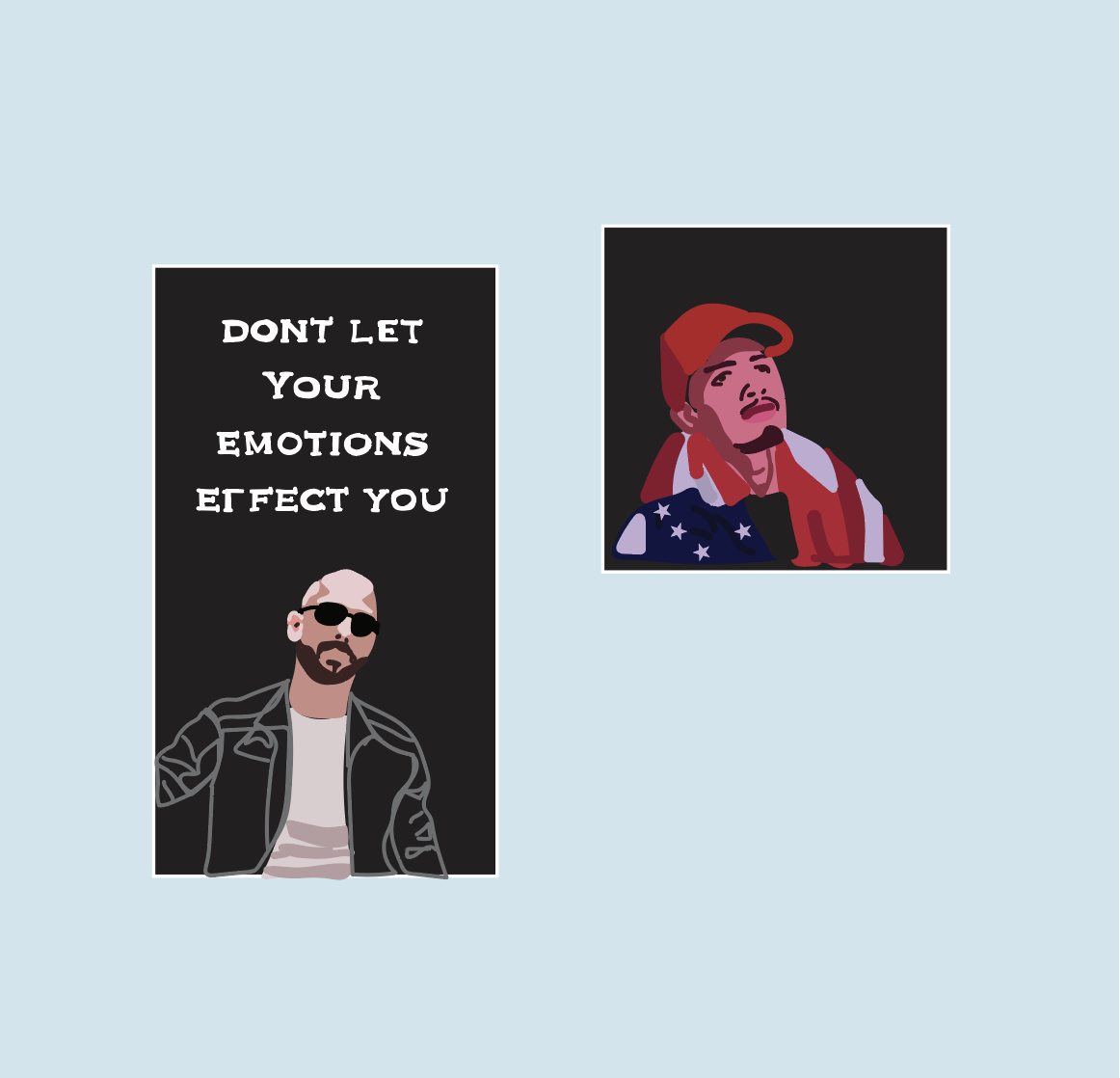
These influencers advertise their lavish lives accompanied by the claim that ‘if you do what I do, you can have this life too.’ According to recent data, many young American men are experiencing discontent with the state of their lives. In a men’s health study done in 2023 by the research group Equimuindo, it was reported that two-thirds of young men feel like “no one really knows them.”
“I definitely think that men’s mental health is a big thing that doesn’t get talked about as much as it should,” senior Aidan Schexnaydre said. “Men have emotions and feelings, that should be obvious. I feel like these stigmas that men have to be strong, men shouldn’t show their emotions, most of these things have been placed on men by other men.”
As the New York Times puts it, recent studies show that young men ages 16-24 are ‘falling behind women’ in categories like education, mental health, and transitioning into adulthood. Influencers like those of the manosphere offer an avenue to young men to feel like they have a way to ‘catch up.’
“I think how it begins is sometimes coming from a background that doesn’t give positive examples of masculinity, and it just leads you down this track of the Charlie Kirk’s and the Andrew Tate’s of the world,” Shahid-Russel said.
Young men are not only struggling with loneliness and falling behind, but are experiencing higher rates of intense mental health struggles. In 2024 statistics from the National Health Institute, suicide rates among young males aged 15-24 were four times higher than that of young females. And since 2000, suicide rates among men, in general, have risen 2.5% percent.
“One reason, I think, we have these rising suicide rates is because we feel like we have too much duty, these certain things that we have to uphold,” junior Spencer Findley said. “When we feel like we have to carry out these duties and be a provider, it really makes us feel like we have a weight being placed on our shoulders that we can’t control.”
Wanting to wake up and work to become the best version of oneself, especially in the face of crippling mental health issues, may offer motivation to those struggling. However, there is a more dangerous side to the ‘manosphere’ and similar types of masculinity content.
“I think the process in men’s minds who don’t have that positive influence of masculinity is ‘there’s no other way,’” Shahid-Russel said. “A lot of times there’s this idea that men should just be born with it, just know what to do, which is not the case. So, I think that’s where we run into a problem. They’re seeing these videos saying they should be a certain way and if they don’t know any better they are going to think they have no other place to turn to.”
While encouraging men to chase a better life, like acquiring wealth, wanting to be more physically fit, and gaining respect, many of these influencers walk the fine line separating men’s self-help from the modern concept of toxic masculinity. Toxic masculinity is defined in the Oxford Dictionary as attitudes or behaviors exhibited by men that have a negative impact on men and society as a whole.
“There’s nothing wrong with promoting masculinity, but when you use that to disguise sexism, that’s a big problem,” Schexnaydre said.” A lot of these masculine influencers are attacking women. They’re not only promoting men, they’re putting women down, and that is a big problem.”
One 2024 study done by psychology and political science professors at Kristianstad University in Sweden had the goal of determining the effect of perceived threats to men’s status on men’s attitudes. Using a hierarchical regression model, they found that exposure to threats to men as communicated by ‘manfluencers’ would increase misogynistic attitudes among young men.
“A lot of those ideas, unfortunately, are suppressive,” junior Adam Hart said. “They may be backed by what they believe is a good cause, but they definitely don’t do women justice.”
This study cited a definition of misogyny as hateful beliefs and contempt toward women, and deeply held prejudices about women. Influencer Myron Gaines of the Fresh and Fit podcast published a book in 2023 titled “Why Women Deserve Less.”
“When you say that a man should be in charge, or that they should be the man of the house, that kind of narrative, it doesn’t just affect the man who holds the idea,” Shahid-Russel said. “It also impacts the concept of femininity around it because that implies that a woman should be willing to have you be dominant, and willing to have you in charge.’
Gaines said in this book, “Women are surrounded by this tornado of misinformation, but nobody corrects them because we want to f*** them.” He also urges men to consider the ‘opportunity costs’ when putting efforts into relationships with women.
“It causes a distorted view of what relationships should be and how consent is,” Shahid-Russel said. “Obviously, no means no, but it you’re told over and over that no is a different thing, then it leads to a lot distortion and negative associations with consent and relationships.”
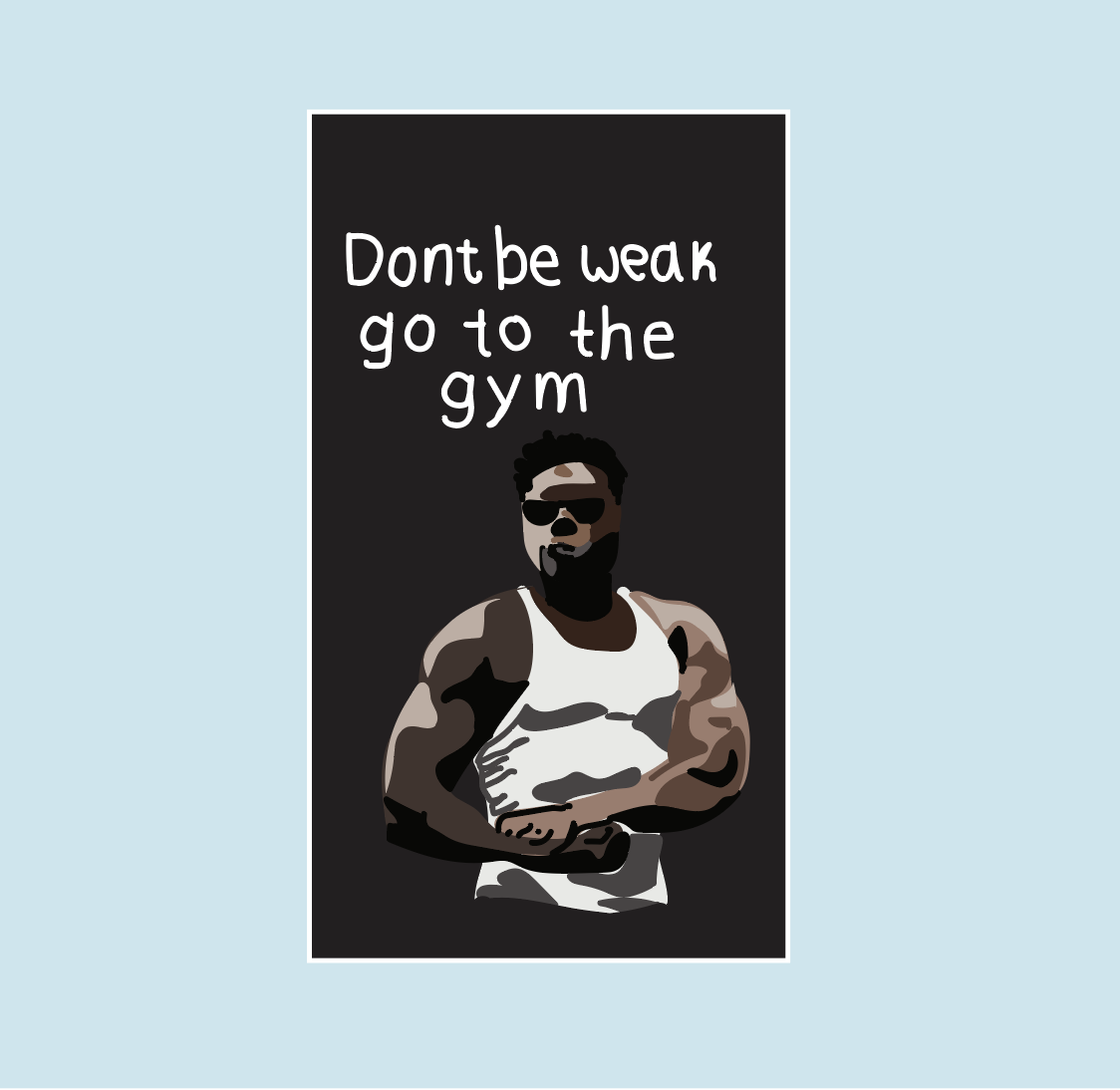
“Andrew Tate has said a lot of things about throwing your emotions away,” Findley said. “He’s said that throwing your emotions away will help you get through things, but if you throw away your emotions you can’t manage them as easily. We need to learn to use them in a healthy way.”
A 2018 study by the National Institute of Health highlighted that not being able to feel, and process negative emotions leads to an increase in anxiety, depression, and PTSD. When coupled with rising statistics of mental health struggles among young men, philosophies like those of Tate and others become incredibly controversial.
“Masculinity is not about throwing your emotions away,” Findley said. “Men deal with a lot of mental health problems, so much so that we have a men’s mental health month. I think it’s very important for us to be in tune with our emotions, so that we don’t overpower other people close to us.”
However, masculinity-focused influencers do not all create content exhibiting toxic masculinity. Many more recently trending male influencers actually build their platforms on shutting down these ideas.
“Theres a guy who’s one of my favorite influencers, they call him Papa Noel,” Findley said. “ He’s made videos talking about how he didn’t grow up with a dad, and he’s now using his platform to help men grow into being in-tune with how you feel and making sure they feel like they’re enough.”
In the age of social media dominating young people’s lives, it can be hard to decide which influences to tune out, and which ones to heed. Definitions of masculinity will continue to morph and develop, so many young men are beginning to turn within to define what it means to them.
“The word masculinity is very powerful because of the fact that no one really has the same definition of it,” Hart said. “I believe it’s about being, ultimately, the best human being you can be with the duty and the heart and power you have. It’s about trying to make the world a better place in whatever ways you can and not trying to force yourself to get through something at the cost of neglecting yourself.”
Your donation will support the student journalists of James Bowie High School. Your contribution will help cover our annual website hosting costs. Any contributions made through this service are NOT tax deductible. If you would like to make a tax deductible donation OR to subscribe to our print edition, please contact us at [email protected].