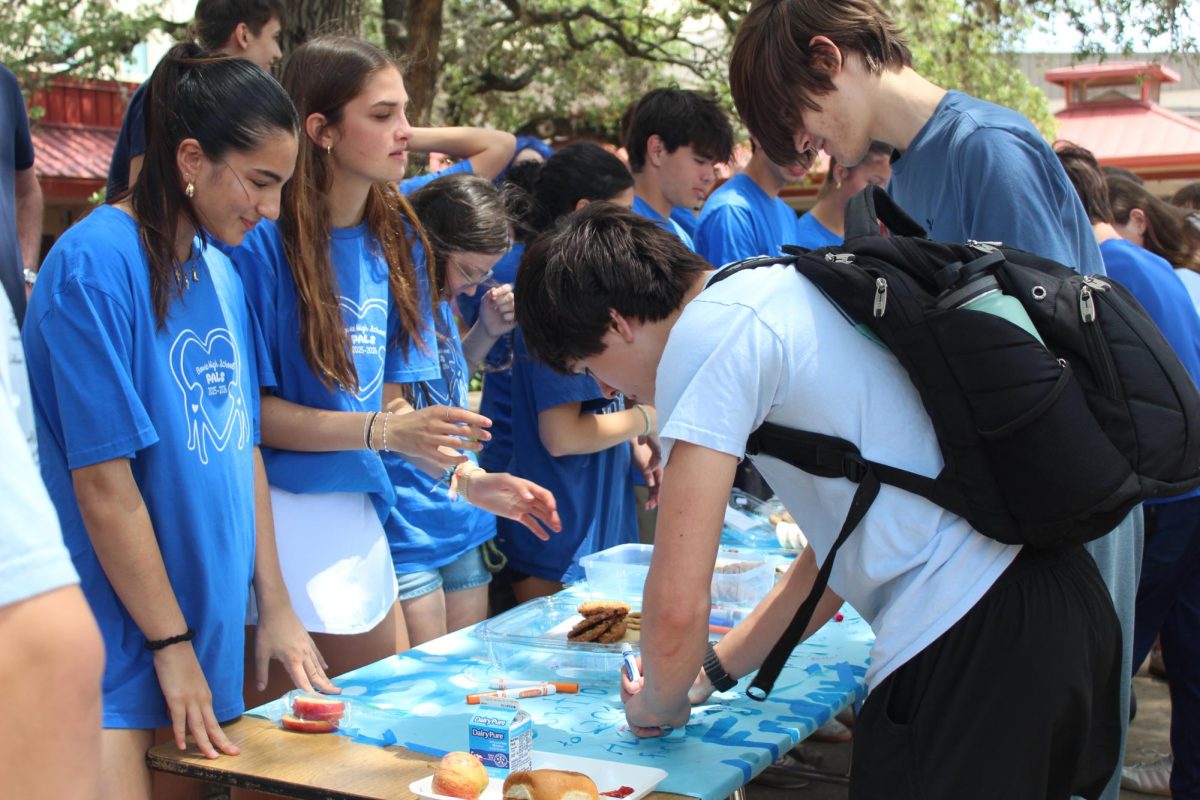

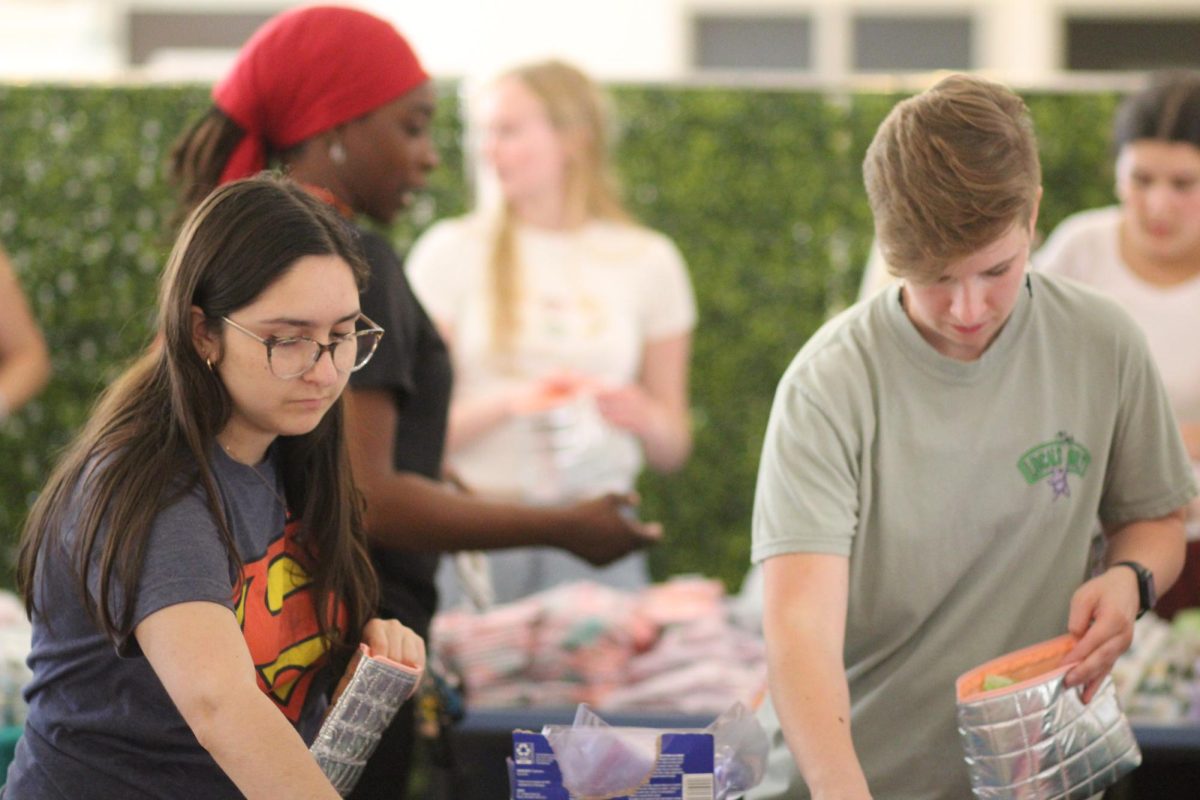
Walking into room F137, students from a variety of organizations gather together to sort period products for the annual menstrual product drive. This drive is run by English teacher Chrissy Henjy, who has sponsored it for five years and has collected between 1,600 and 2,100 donations each year. All donations collected from the drive go to the organization I Support the Girls (ISTG) Austin.
At the end of March every year, Hejny hosts a packing party where students and teachers help pack and sort all the donated products. Donations were accepted through the entire month of March and ended on the last day of the month with a giant packing party held in room F137 during 4th period. Products were collected in bins placed in Biology teacher Jessica Davis’s room, math teacher Dana Stiles’s, English teacher Kimberly Wiedmeyer’s, and Henjy’s classroom.
“In the first year that we did it, it was such a success,” Hejny said. “Kids always come running to help. So, I continued doing it every year because it always makes such an impact.”
The drive collected donations of unopened boxes of pads, tampons, and panty liners. To help support getting donations, the National Honor Society offered service hours to members, where one box equaled one hour for up to four hours. Additionally, the Spanish Honor Society also offered service hours where two boxes equaled one hour, for up to four hours.
“All women go through experiencing a period, and money shouldn’t get in the way of them being able to take care of themselves,” Davis said. “It should be a given that we can take care of ourselves, especially in a society with as much wealth as we actually have. If we can support women so that they can take care of their bodies, I think it’s the least we can do.”
ISTG has been in Austin since 2016, and they collect and donate essential items, including bras, underwear, and menstrual products, to women in need. According to their website, they have partnered with local shelters, agencies, programs, churches, schools, and community groups that serve many groups in need.
“Girls need to get tampons and pads because it’s a necessity for them to have,” freshman Millie Pope said. “A lot of people don’t have the kind of money to buy menstrual products because they tend to be a little bit expensive, and it’s good to have this drive because a lot of women just can’t get them by themselves.”
Pads on average cost about $6.50 for a pack, and tampons cost about $7 to $9 a pack. According to USA Facts, about 13.4% of Texans are in poverty as of 2024 and cannot pay for basic necessities such as food and healthcare items, including period products.
“Ms. Hejny reached out to me back when she started the period drive, and I thought it was a great idea since it’s going to provide support to those who need it,” Davis said. “I know we’ve got a compassionate student body, so I knew they would contribute, and they have. I’ve loved my classroom being a donation site for this drive.”
According to Hejny, ISTG Austin is usually very impressed with how Bowie students and teachers have shown their care for the cause through their donations. This year, the period drive collected enough products to make around 1500 period pouches, but they ran out of pouches and were only able to fill 989 bags. They still donated the remaining products, despite them not being stored in small pouches.
“Periods happen once a month and last usually for seven days,” Pope said. “Some people have stronger flows than others. For some girls, it’s really hard for them to get what they need to make it through their cycle.”
As stated on their website, ISTG Austin works to address period poverty and make sure women don’t have to choose between a hot meal and buying period products. Period poverty is the lack of period products and education, which can be caused by numerous socioeconomic reasons. According to UT Health Houston’s report on period poverty, the people most affected by period poverty are minorities, first-generation college students, and those living with financial hardships.
“Feminine products are necessary for half of the globe’s population,” Henjy said. “Menstruation is a part of nature. It’s a part of many of our lives, and it’s important that we’re able to have cleanliness and sanitary conditions whenever we’re menstruating. It’s an issue that’s important to me and to everyone who menstruates.”