
The clock ticks, voices raise, every minute counts. Inside the halls of Bowie lies the debate room. Here you will see students start to research and write their arguments and begin their practice rounds for debate practice.
On September 26, the Bowie debate team placed second at their tournament located at Anderson High School, arguing whether or not the United Kingdom should rejoin the European Union.
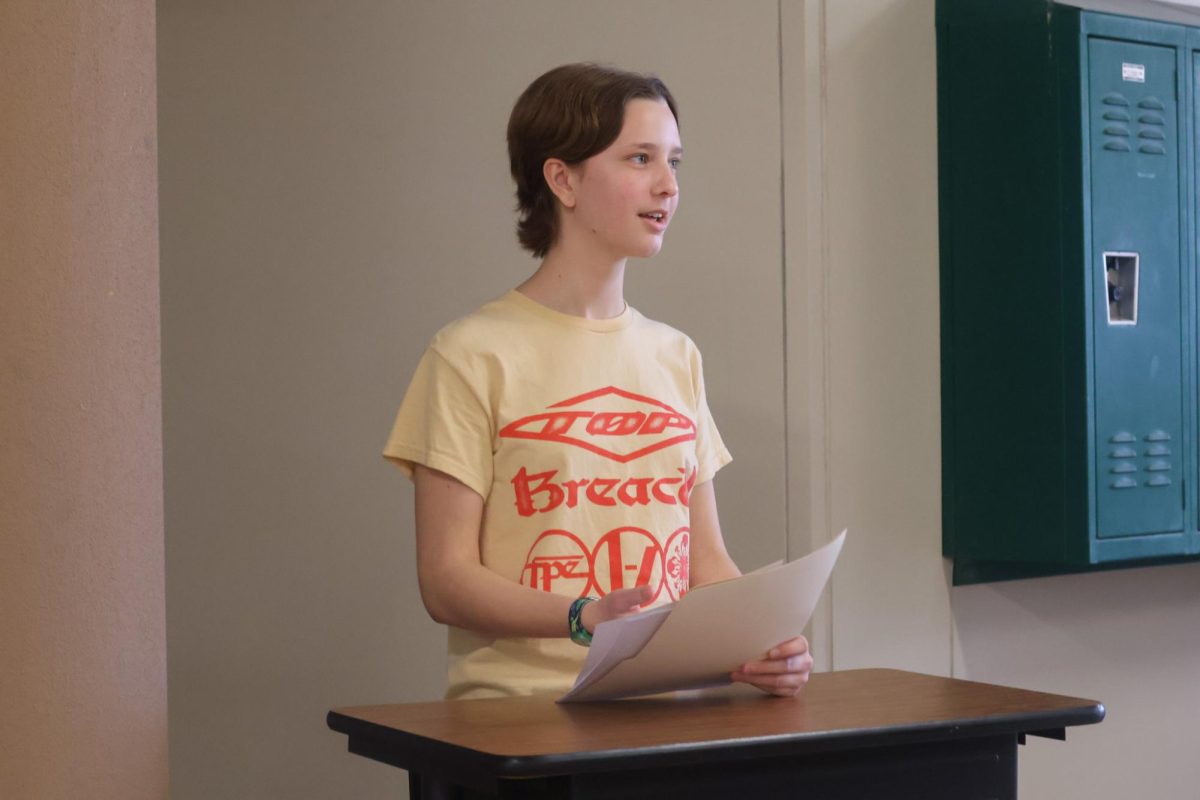
“It was my partner Reagan Huckabee and I competing against a bunch of other partners,” sophomore Holly Herman said. “It’s a tournament style where there are a bunch of prelim rounds and then we compete and get eliminated until there’s just two final opponents. And that was what we did.”
Tournaments are usually held in a high school classroom with two teams and a judge. The goal of this is to help the environment become a shared learning experience where students can exchange ideas and opinions and acquire insight from both sides of the argument.
“We get there in the morning and then we convene as a team, and then each pair or duo goes to individual rounds,” Herman said. “We compete in those and then we keep regrouping and going back to rounds until people start getting eliminated at Bowie.”
At tournaments, judges score speakers based on their organization, persuasiveness, and clarity of their arguments that are presented to the team. Each team takes on an opposing position to the assigned argument.
“it’s sort of like verbal chess,” Huckabee said. “It forces you to reevaluate your own opinions and take another person’s opinions into consideration.”
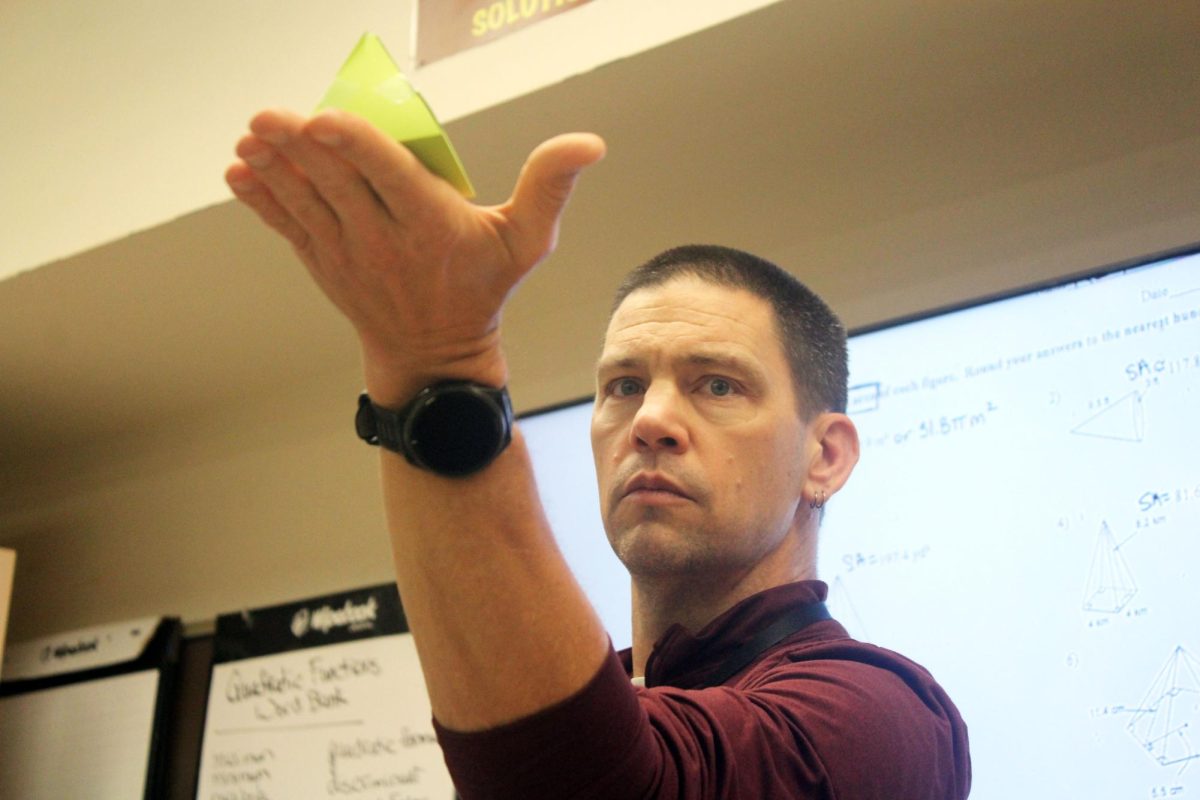
Guiding the team through their successes is debate teacher John Mast, who started working with high school debate teams in college. Mast explains that the debate class is an opportunity to learn and see what debate is like, but for those on the debate team, the idea is to give them time to work on arguments and do practice rounds.
“Normally I try to let them come up with their own arguments after doing some research,” Mast said. “I try to make sure that they are argumentatively strong and sound. I’ll give them some ideas, but most of the time I’d rather them come up with their own because then they’re more comfortable with the arguments themselves.”
According to Huckabee, for most tournaments, there will be two online debates the Friday beforehand. Afterwards, the competitors go in person on Saturday and if you were to win three out of the four rounds, you would move onto finals. Then, from the finals, there is a match of semi-finals.
“The first couple of rounds you almost never have an audience other than your opponent and the judge,” Huckabee said. “But in most of the final rounds when people come in and watch, it can get a lot scarier especially because sometimes you’re facing the entire audience.”
The topic that is argued at a debate tournament is known as the resolution. It’s given out before the tournament so that the teams can get a chance to write arguments for both sides of the resolution.
“There’s a pre-written topic and we spend a few weeks as the Bowie Debate Team just compiling research and evidence, and then once we go in, we debate other teams from other schools,” Herman said.
Although many students join Debate for the competition aspect, the debate program also attracts many students who simply enjoy discovering and discussing new ideas and topics.
“For some kids it’s a competitive thing and they want to do well,” Mast said. “But for others they just want to learn something, and they enjoy talking about foreign policy, what’s happening in politics, or philosophical ideas. So for those folks, sometimes, just the opportunity to talk about those things is better than the debate itself.”
Even though debate is all about public speaking, according to Mast it can still be nerve racking before a tournament. Mast explains that public speaking is the number one biggest fear in America and even though debate may help short term, it takes time because those in Debate must be willing to put themselves out there and then learn that no one is going to laugh at them.
“I’ve never really been affected by public speaking because I just tune everyone out,” Huckabee said. “But if I’m ever really nervous, chewing gum for some reason is really helpful.”
Although critical thinking and public speaking skills are often seen as the main skills that you need for debate, many others are needed. Participants may rely on many other personal strengths to help them in their arguments.
“For debate, you need the willingness to learn, the ability to do research and read, intellectual curiosity, and a certain amount of grit,” Mast said. “Very few people walk through the door with debate skills ahead of time, but if they’re not willing to go try something new, then they’re going to end up quitting, you just have to kind of stick it out and be willing to try it out.“
For certain members, debate has become much more than just arguments and winning, but it has become an opportunity to learn and grow with their peers about different strategies and debate topics.
“It’s just a lot of people learning together,” Herman said. “These are all topics that we’ve never really explored in our personal lives, and so we all get an opportunity to learn about different things outside of our lives together and just do a bunch of collaborative work.”