

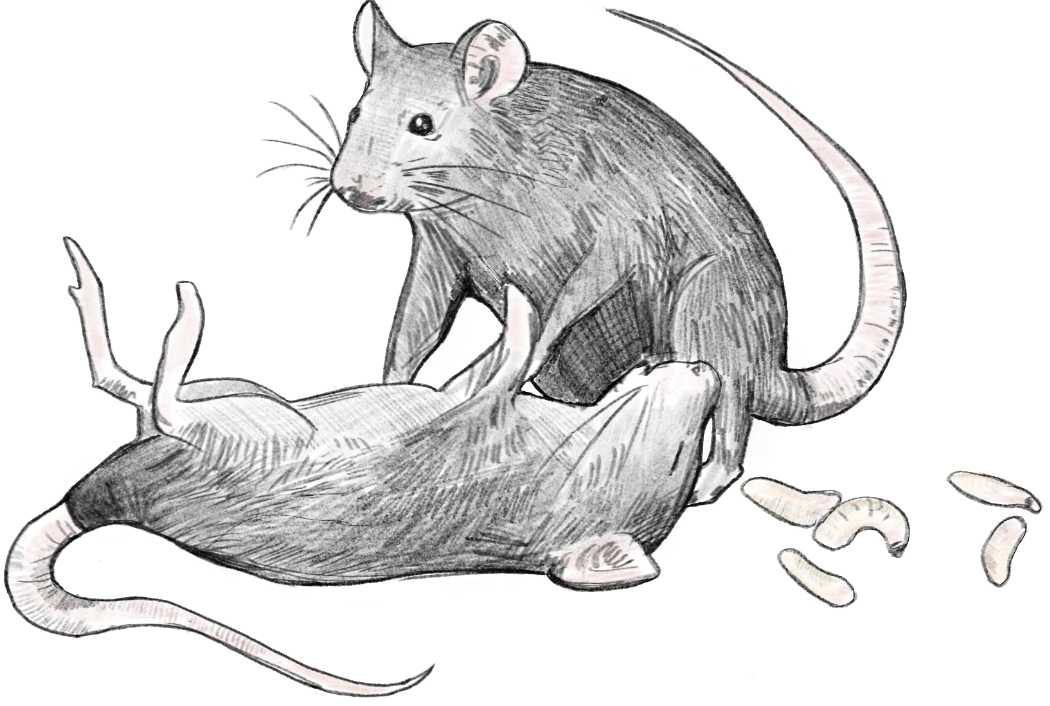
Rats infesting teachers’ classrooms have appeared multiple times throughout the school this year. Science teacher Erin Kowalik has had various rat encounters and so have many other teachers and students.
In schools with older buildings like Bowie’s academic building there are many ways for rats to enter school-grounds. Whether it’s through walls, vents, ceilings, or windows, they always get their way into student classrooms.
“One time I was organizing stuff with the theater and we were trying to pull this couch out from the back and there were these two rats there,” junior Violet Martinez said. “We had to all leave because of the rats.”
According to Roberts Termite and Pest Control, rats can be a big problem in Austin Texas, they can carry diseases and parasites. Rats also chew through things like wires, pipes, insulation, drywall, furniture, and clothes.
“Over Thanksgiving break a rat died in the ceiling and when I came back the whole room smelled and after the rat was gone maggots started falling from the ceiling and they had to be cleaned out,” Kowalik said. “Last year seeing a living rat running around on top of my cabinets was potentially more horrifying than that because it was alive. The rats also ate all of our lab experiment corn plants.”
According to Kowalik, the only way to get rid of the rat problem in classrooms would be to have some sort of bond to reformat Bowie’s facilities in order to make the school rat proof. According to the University of Nebraska rat proof construction guide, rat proof buildings have no gaps larger than ¼ an inch and are built with durable materials such as steel wool and concrete. Metal sheets placed on the interior walls can prevent rats from climbing into ceilings and vents.
“I think the academic building could use a lot of new construction and a lot of remodeling in the rafters,” freshman Lola Hejny said. “The whole building is concrete which causes a lot of ways for rats to get into the vents and open windows. I looked in a window once and I saw a dead rat on the floor and it was the window of one of my teachers, Ms. Gonzalez.”
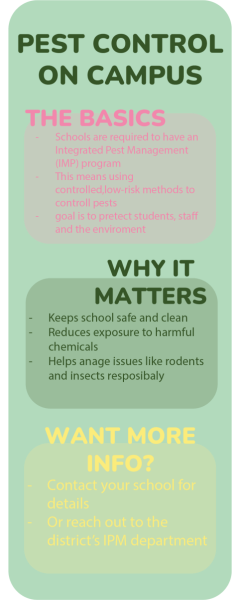
Austin Independent School District (AISD) uses Integrated Pest Management (IPM) which uses the least toxic solution for getting rid of pests. According to AISD’s IPM document provided on the AISD website, their goal is to not interrupt students while managing pests and to not use the herbicide glyphosate. Glyphosate is dangerous for humans because of risks for cancer and gut health.
“Over the summer the school is neglected and not cleaned very often, I think the rat problem is all about neglect because a lot of stuff is really old and never cleaned or moved or anything,” Hejny said. “Rats can be a really big problem because they’re really dirty and gross and even if they don’t carry diseases they’re also quite a distraction and the whole school is basically just infested with them.”
Some diseases that rats carry include, Leptospirosis, Rat-bite fever, Tularemia, and Salmonellosis. The parasites that they carry include ticks, worms, fleas, and lice. According to the city of Austin (.gov), call 3-1-1 to report a rodent problem or contact them online.
“In theater, they’re always in the classrooms, which is super unsanitary and scary,” Martinez said. “In choir, they got into a bunch of our stuff that we use for our events and so we had to go buy a lot of new stuff and make sure nothing had rat poop on it and clean everything.”
According to KUT news, in 2021, 543 callers called to the city of Austin about rodent issues related to rats, in 2022 474 people called, and in 2023 457 people called. Austin has a rat population because of how adaptable rats are, they are also able to eat a lot of things.
“This building is really old and has a lot of ways for wild life to get in and so it’s very difficult to keep rats out,” Kowalik said. “So even if we were able to kill the rats they could still find their way in and we are a fabulous shelter and food source for them.”
According to the IPM Action Plan for Pest Management at Texas A&M, mice tend to travel 30 feet away from their nesting sites and rats tend to travel up to 300 feet away from their nesting sites to gather food. Rats are an invasive species and students and teachers worry about school learning and the safety of one another with rats roaming the halls.
“There have been rat issues for years and years and years,” Kowalik said. “It’s been a consistent problem for a very long time.”