
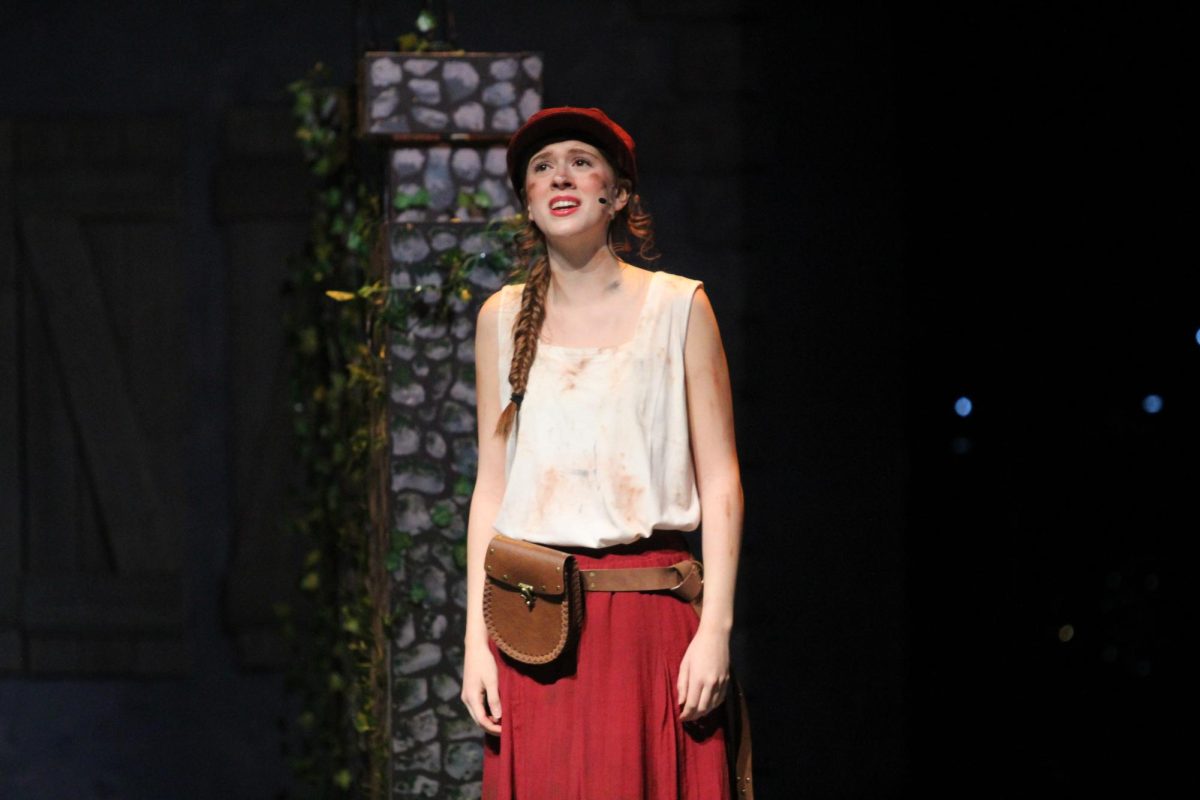
As the lights in the theater fade and the first haunting notes echo through the air, the audience is swept into the shadowed streets of 19th-century France, where revolution simmers, justice is tested, and the powerful story of Les Misérables unfolds.
Since late fall, the Bowie Starlight Theater Company (STC) has been preparing for its production of Les Misérables, a large-scale musical told entirely through song, accompanied by a live orchestra. Directed by Marco Bazan, Kade Lassiegne, Matthew Humphrey, and Courtney Hall, the team oversaw all aspects of performance, music, and technical elements to bring the show to life. The performances took place over two weekends on January 22, 23, 28-31, and February 1.
“Les Misérables has a lot of moving parts, and every detail has to work together,” Lassiegne said. “From the music to the set pieces, it’s been about staying intentional and committed so the story can really come to life for both the performers and the audience.”
Unlike past productions, this year’s musical pushed cast members to explore heavier emotions and more demanding music. Les Misérables required performers to step outside their comfort zones, not just vocally, but emotionally, as they worked to tell a much darker and more complex story. For many students, the show challenged them to connect more deeply with both their characters and their fellow cast members.
“I think it’s really a lot different from our musical last year, Mamma Mia,” junior Marin Lawson said. “It’s a lot more emotional, and we’re doing it with a dialect as well and connecting with the actors more. It’s a really sad, emotional play, so being able to act through that was really hard for me, and the music was ten times harder as well, but the entire cast and crew worked together to give our best performances.”
This year’s production of Les Misérables required cast members to coordinate more than just singing and acting. It demanded precise timing, physical awareness, and teamwork to bring the massive set and revolutionary Paris to life. Junior Clover Murray played the character of Tenardier also participated in the large ensemble on his off nights.
“I think the main thing I learned about teamwork is to make sure everyone is on the same page when things need to happen during the show,” Murray said. “There are many big ensemble numbers and set transitions happening, so it was important for all of us to communicate and work together closely.”
Beyond individual roles, the cast also had to master the technical side of performing as a team, learning how to blend their voices and work in harmony with the live band. Senior Sasha Zimmerman, who worked on sound and technical support for the production, reflected on the behind-the-scenes teamwork that kept the show running smoothly.
“I think one of the most important parts of our job is communication,” Zimmerman said. “We have to make sure the band, the actors, and the tech crew are all on the same page. Even small mistakes can throw off a scene, so being clear and working together is key to making the show feel seamless.”
Beyond the emotional performances and technical precision, the success of Les Misérables ultimately depended on the collective effort of the entire company. From the ensemble on stage to the musicians in the pit and the technicians behind the scenes, every group played a critical role in bringing the production together. For many students, the show highlighted how collaboration across all areas of theater is essential to creating a seamless and impactful performance.
“Teamwork is what really makes the show come together,” junior Adam Hart said. “The actors, the band, and the tech crew all rely on each other, and seeing every piece fit together is what makes the production so powerful.”