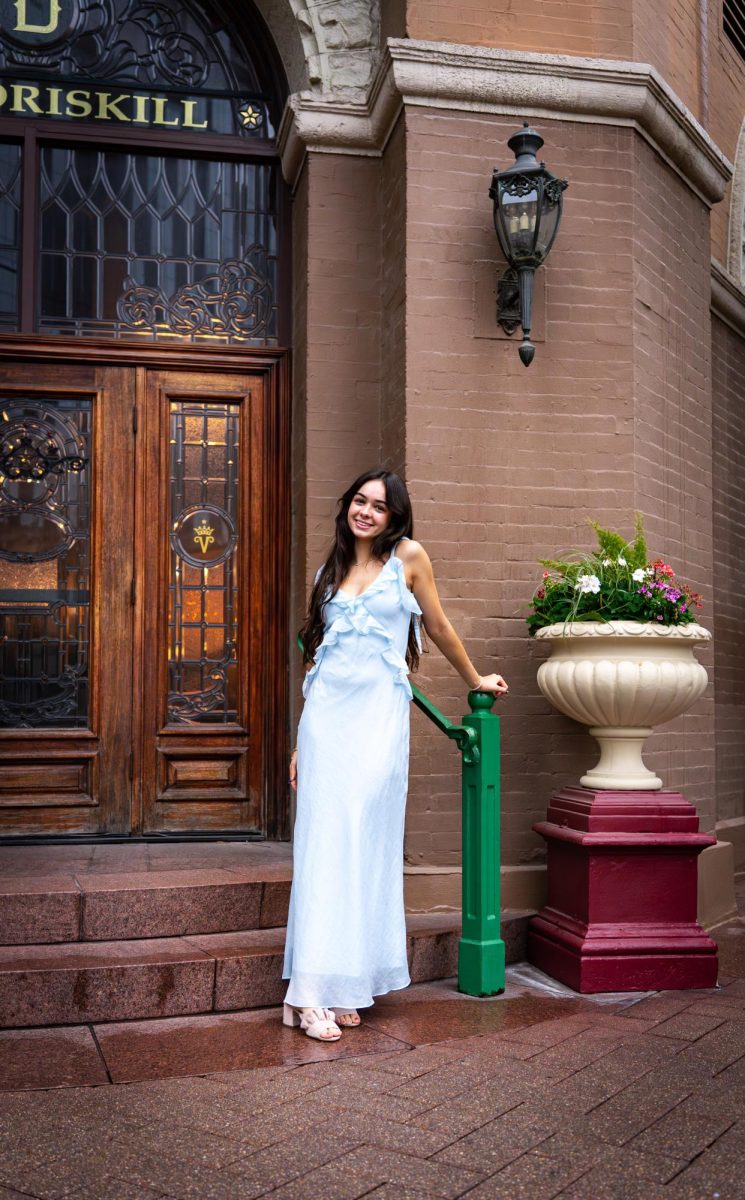

Dressed in athletic wear to appear more “straight,” junior Gwen Anderson anxiously steps into their family’s car, terrified of the judgment they may face as their family embarks on their annual summer road trip. Anderson, a teen who is a part of the LGBTQ community, is nervous about driving through small, conservative Texas towns. As Texas continues to pass more oppressive laws that directly impact members of the LGBTQ community, it could be increasingly harder for LGBTQ teens such as Anderson to feel safe in their home state.
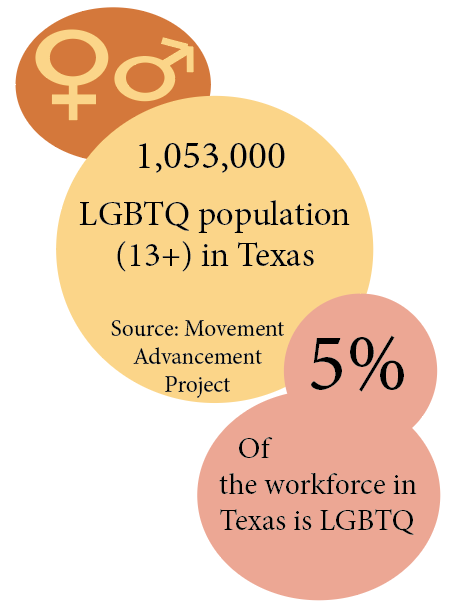
According to the American Civil Liberties Union of Texas (ACLU), a civil rights organization in Texas, this past legislative year, over 200 anti-LGBTQ bills were proposed in Texas and only eight ultimately ended up passing. As stated in an article by the Texas Tribune, these bills are part of a larger, multi-year movement to limit the presence of LGBTQ and trans Texans. According to the ACLU Texas has the second-largest population of LGBTQ people however, LGBTQ Texans currently lack basic protections.
“These bills are being passed because Republicans want to control others, specifically women and people who are generally discriminated against, such as people of color or LGBTQ,” Anderson said. “Before these bills, we were functioning genuinely well. I felt comfortable. I’m non-binary, and as a child, I felt protected. These bills continue to be passed as a way of control rather than protecting these communities.”
Senate Bill 12 (SB12) was signed into law on June 20, and can affect LGBTQ communities in several different ways. According to Texas AFT, this bill prevents schools from helping with “social transitioning,” which is non-medical steps to align one’s gender expression with their gender identity. Social transitioning can often include changing one’s name, pronouns, or style of dress. According to Texas Public Radio, under SB12, nicknames based on a student’s birth name are allowed. However, in situations where a nickname appears to be gender-neutral, such as a student named Samantha going by the name Sam, there is a gray area regarding whether teachers can still honor the nickname.
“One of my close friends who lives in Florida, where similar bills have been passed, specifically bills that prevent teachers from accepting nicknames, have caused my friend and a lot of her queer friends to feel terrified for themselves,” Anderson said. “Similar things are going to take place here in Texas. It’s already started, and I know certain friends of mine are absolutely terrified of what this means for them because they come from conservative families. There will be more damage caused to students because there will be this rhetoric pushed from their parents that their child is born wrong.”
Additionally, SB12 enforces some curriculum and instructional changes in the classroom. Teachers must provide syllabi or instructional plans before the semester begins, and they’re prohibited from teaching any materials outside of the scope of Texas Essential Knowledge and Skills (TEKS). Schools must also obtain written parental consent at least 14 days before human sexuality instruction. This helps to prohibit instruction, guidance, or activities that relate to sexual orientation or gender identity at any grade level. This is often referred to as the “Don’t Say Gay” provision.
“Bowie tends to be a very welcoming place,” lead counselor Nicole Hepburn said. “Teachers are doing the best they can within the law to still make sure that students feel welcome. I think that with these bills, especially SB12, the goal is for more parent involvement, but I do feel that certain groups are being targeted.”
In addition to this, SB12 requires written parental consent for student participation in any authorized student club. This bill also prohibits school districts from authorizing or sponsoring clubs organized around sexual orientation or gender identity, specifically impacting Gay-Straight Alliances (GSAs) and similar groups from receiving official recognition. This bill does allow for single-gender clubs with missions that “do not advance a political or social agenda,” creating a slim exception to the law. One example of this would be a club like the Bowie Society of Women Engineers club.
“There are so many laws and legislation limiting stuff, which makes school not a very safe environment for students and makes everything a lot more complicated,” senior Damien Boring said. “The law allows teachers who might not agree with how students choose to express themselves to get away with bigotry and discrimination against their students. Even outside of the bills, students misuse resources that were supposed to help make people who are trans or gender-queer feel more comfortable, forcing those resources to be taken away from people who need them.”
Another bill that was passed this most recent legislative session, Senate Bill 8 (SB8), restricts which restrooms transgender people are allowed to use in government buildings and public schools. This bill requires that people use the bathroom that coordinates with their birth sex. According to the Texas Tribune, the bill will go into effect on December 4 and allow for institutions to be fined up to $125,000 for violations.
“I don’t think that AISD will enforce this bill as harshly as other districts,” Boring said. “I feel like if Texas chooses to enforce this bill harshly, like with the phone ban, then they would have to be more strict. We do have a lot of communities here at Bowie that don’t crack down on stuff like that, so hopefully that will continue.”
Supporters of SB8 have referred to this bill as the “Texas Women’s Privacy Act,” claiming that the bill is necessary for helping keep intimate spaces such as bathrooms and changing rooms safe and comfortable for women. However, opponents of the bill feel that it allows for the harassment of trans people and for cisgender people to be falsely accused of entering the wrong bathroom. While the conversations on how the bill would be enforced started with committee members suggesting that the policy would be enforced based on how someone looks, the government buildings will ultimately be responsible for deciding how they want to enforce the bill.
“I think these bills are going to make students more aware of the laws,” Hepburn said. “I’ve seen in my lifetime that teenagers are more aware of laws than they’ve ever been before because they’re realizing that these bills impact them.”
With many high school students submitting their college applications right now, many Texan and Bowie students end up applying to the University of Texas or other local Texas colleges as an option. However, students’ college decisions may be impacted by the Trump administration, because they recently sent a letter to the University of Texas and eight other universities asking them to join a “compact” that would give them access to preferential federal funding, according to the Texas Tribune. To qualify for the benefit one of the things asked of universities is to hold a stricter definition of gender. Universities would also be required to ban the use of race and sex considerations in admissions.
“As a queer individual, I wouldn’t go to UT if they accepted Trump’s money because it shows a lack of respect and inclusion for the queer community,” senior Hannah Vanhorn. “I would not feel safe or welcome attending UT if they chose to disregard the identities of their students.”
Organizations such as the ACLU, believe that every kid in school deserves a safe, supportive learning environment. The ACLU has created an online resource called TxTransKids.org, where students can go if they need to talk to someone about access to school bathrooms or other facilities, GSAs, bullying, cyberbullying, harassment or dress codes. Their goal is to ensure that K-12 transgender, non-binary, and gender nonconforming students have access to the resources that they need.
“The legislation will continue to get worse, especially in public schools, because these have already been in place,” Boring said. “They’ve always been somehow written in, whether it’s microaggressions against trans people or just not respecting people’s names. There are a lot of things getting passed right now that people disagree with, but the legislators don’t particularly care. This legislation could cause people to go back into the closet if they are out or not come out because of fear of being bullied or harassed, or even force people to take drastic measures like suicide.”